


A Living Tribute
Blog
Recent Posts
-
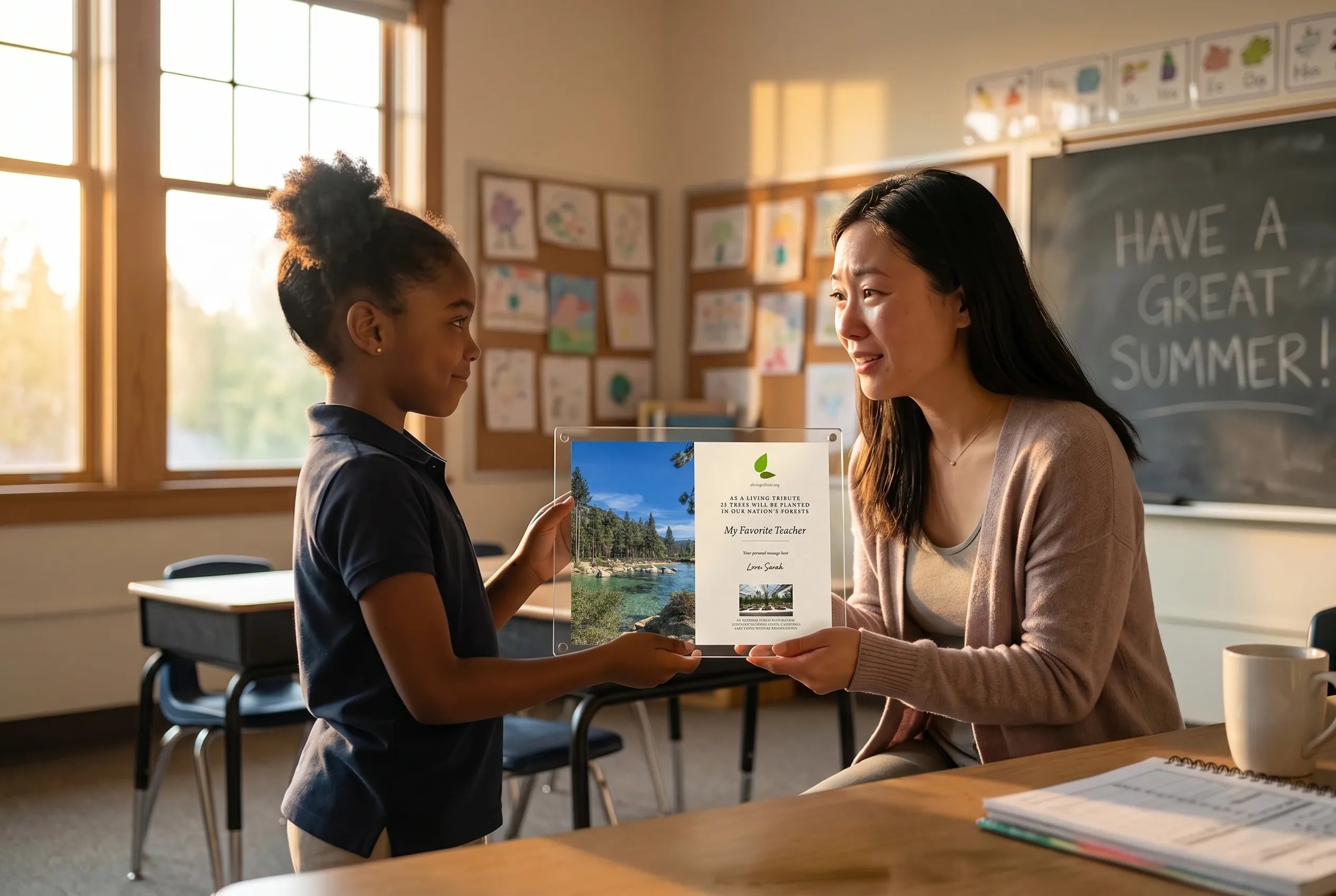 Read More
The best end-of-year teacher gift ideas go further than a gift card or a mug. They reflect something real about the person being honored, and they last beyond the week the card sits on the desk.
Here are 15 ideas worth giving, including one that grows in a U.S. National Forest for decades.
Most gift guides for teachers recycle the same list: candles, chocolates, a mug with a clever saying. Teachers receive these in multiples every June, and most will tell you they appreciate the thought even when the gift ends up in a drawer.
The gifts that stay are the ones that feel specific. The handwritten note that names something true about a student. The class photo book that captures a year that can't be repeated. The tribute tree that grows in a forest recovering from wildfire, planted in the teacher's honor with a certificate they can keep.
This guide covers all of it, including one option that stands well apart from the others.
Teacher Gifts Overview:
-
A tribute tree planted in a U.S. National Forest honors a teacher's living impact in the classroom and arrives as a personalized keepsake certificate, starting at $9.99
-
Classrooms of students pooling $3 to $5 each can fund a group tribute that feels more significant than individual gifts; many online platforms make collecting easy
-
Practical gift cards rank highest in what teachers say they actually want when they need something useful which pairs nicely with our tribute tree offerings
-
Handwritten student letters remain one of the most remembered gestures, regardless of cost
-
Mugs, scented candles, and generic chocolate baskets are the most common gifts teachers already have too many of
The gift that grows: planting a tree in a teacher's honor
A tribute tree planted in a U.S. National Forest in your teacher's name is a gift that grows stronger with every passing season, contributes to verified reforestation, and arrives as a personalized certificate the teacher can frame and keep for years in the classroom.
It is different from every other gift on this list. Not because it costs more, but because it will outlast the school year by decades.
When you plant a tree in honor of a teacher through A Living Tribute, the tribute is planted by contracted professional tree planters under the supervision of the U.S. Forest Service. Trees go into forests that need them most, areas recovering from wildfire, disease, and deforestation. Over 1 million acres of National Forest land currently need replanting. A teacher's tribute becomes part of that restoration.
What the teacher receives
The teacher receives a personalized commemorative certificate with their name, a custom message from the gift-giver, and the details of their tree planting. The certificate is printed on FSC Certified 120 lb. gloss card stock and mailed directly to the recipient. A digital e-certificate option is also available for instant delivery.
That certificate earns a place on a classroom wall or in a desk drawer in a way that a mug never does. It says something specific: this person's impact is worth honoring with something that grows and endures.
The personalized message can come from a parent, an individual student, or an entire class. "Planted in honor of Mrs. Thompson by the students of Social Studies, 2026" makes a group contribution feel cohesive and personal at the same time.
What it costs
Tribute trees start at $9.99 for a digital certificate. A class of 25 students contributing $2 each reaches $50, which covers a beautiful mailed tribute. You can learn more about how much it costs to plant a tribute tree across different product tiers.
Teachers who care about the environment, which many do, will recognize that this gift reflects something beyond the gesture itself. It supports real conservation work through partnerships with the National Forest Foundation and American Forests, not vague eco-language. That specificity matters.
Plant a tree in honor of a teacher who made a difference
How to coordinate a group teacher gift (students pooling money together)

A group gift carries a different kind of weight than an individual one. It says that many families, across different circumstances, agreed this person was worth the effort.
Here is how to make it happen without the coordination becoming a burden.
Set a simple contribution range. $3 to $5 per student is appropriate for most families. In a class of 25, that reaches $75 to $125. That budget covers a tribute tree with a mailed certificate and still leaves room for a class-signed card or a small add-on.
Use a collection tool that removes the friction. Platforms like Cheddar Up or Tiing allow parents to contribute online through a shared link, no cash handling required. A shared Google Form with Venmo or PayPal is a simpler alternative. One designated parent organizer, a single message to the class group chat, and the process runs itself.
Make the message collective. The certificate message on a tribute tree can come from the whole class. That gives the gift a dimension that even a generous individual present cannot replicate.
A tribute tree is especially well-suited to group giving because the product is designed around shared intention. Read more about how group tree planting works when multiple contributors come together for one meaningful tribute.
14 more teacher gift ideas worth giving
Not every gift needs to be a tribute tree. These 14 ideas cover the full range, from practical to deeply personal, organized by what they do well.
Personalized and memory-based gifts
2. Class photo book. A printed photo book of the school year, assembled by parents or students from shared photos, is one of the most personal gifts a teacher can receive. It documents a year they cannot recreate on their own. Services like Chatbooks, Shutterfly, or Artifact Uprising make this easy to produce and relatively affordable.
3. Personalized thank-you card set with student signatures. A single large card signed by every student, or a folder of individual notes, carries more emotional weight than almost anything purchased. Students can add drawings, a specific memory, or a sentence about what they learned.
4. Classroom fingerprint tree art. A fingerprint tree is a project where each student adds a thumbprint as a "leaf" to a printed tree illustration. The result is a framed piece of art made entirely by the class. It is unique, personal, and costs very little to produce.
Practical gifts teachers actually use
5. Amazon or Target gift card. Survey after survey from teachers confirms this: gift cards rank at or near the top of what they actually want. According to the National Education Association, teachers spend an average of $500 or more each year out of pocket on classroom supplies. A gift card lets them direct the money exactly where it is needed most.
6. Classroom supply kit. If a tangible gift feels more appropriate, a curated kit of good-quality pens, sticky notes, dry-erase markers, and organization supplies is genuinely useful. The quality matters more than the quantity.
7. Personalized teacher planner or tote bag. A well-made tote with the teacher's name or a thoughtful phrase, or a daily planner for the following school year, is practical and personal. These are items used daily and appreciated well past June.
Wellness and self-care gifts
8. Coffee shop gift card. A local coffee shop or Starbucks card is one of the most reliably appreciated gifts for teachers who live on caffeine during the school year. It is useful through the summer and into the fall.
9. Spa or massage gift certificate. Teaching is demanding in ways that are easy for non-teachers to underestimate. A gift certificate to a local spa or massage studio says you recognize that. It creates a genuine moment of rest.
10. Personalized water bottle or tumbler. A quality tumbler with the teacher's name is used every day. If you know the teacher already has a favorite brand, ask before choosing this one.
Experiences and subscriptions
11. Audible or book subscription. Teachers tend to be readers. A three-month Audible subscription or a gift card to a local bookstore gives them something to look forward to over the summer.
12. Movie theater or streaming gift card. A movie theater card or a one-month gift subscription to a streaming service they do not already have is a genuinely enjoyable gift for summer.
13. Curated subscription box. A subscription box tailored to a teacher's interests, whether cooking, wellness, outdoor activities, or craft supplies, is a gift that keeps arriving after the school year ends.
Heartfelt gifts that cost very little
14. Handwritten student letters. Ask every student to write two or three sentences answering: "What is one thing your teacher taught you this year?" Compile the notes in a folder or simple book. Teachers keep these. They come back to them during difficult stretches. No gift purchased from a store will last as long.
15. Appreciation jar or class memory poster. A glass jar filled with slips of paper, each carrying a favorite memory or message from a student, costs a few dollars and takes an afternoon to make. It becomes a permanent source of encouragement.
The jar that lasted three years
A third-grade teacher received an appreciation jar from his students in June 2022. Each of his 24 students had written one memory on a slip of paper. Some were specific: "The volcano experiment." "When you stayed late to help me with fractions." "The book about the dog." Others were simple: "You made me like reading."
He still has the jar on his desk. He says he opens it when the work feels heavy.
That is what a genuinely personal gift does. It arrives once and stays for a lifetime.
Gifts to skip (and why teachers will thank you)
A few categories appear in teacher gift guides repeatedly but rarely land well with the people receiving them.
Mugs with teacher slogans. Most teachers already have more mugs than they will ever use. "World's Best Teacher" and "Teach Love Inspire" are everywhere. Unless a teacher is a specific mug collector, this category is oversaturated before June even begins.
Scented candles and lotion sets. These accumulate quickly. Scent preferences are personal, allergies are common, and most classroom gift sets in this category are not particularly high quality. It is a safe choice that rarely feels meaningful.
Generic candy and chocolate baskets. Dietary restrictions vary widely. Sweets are appreciated in the moment but don't reflect thoughts about the specific person receiving them.
The gifts that stay in teachers' memories are the ones that felt specific, the ones that showed the gift-giver had considered who the teacher actually is.
A gift that outlives the school year
Teachers spend years building something in their students that cannot always be measured. They spend their own money on supplies. They stay late. They write the encouraging notes that some students will carry with them for the rest of their lives.
A good end-of-year teacher gift idea acknowledges that investment. It does not need to be expensive. It needs to feel considered.
The ideas in this guide all have their place. A gift card helps practically. A handwritten note lasts a lifetime. A class photo book preserves a year that cannot be recovered.
But a tribute tree planted in a U.S. National Forest in a teacher's name does something none of the others can. It grows.
Through our conservation partnerships with the National Forest Foundation and American Forests, every tribute becomes part of verified reforestation that will stand for decades.
The teacher gets a beautiful personalized certificate. The forest gets a tree it needs.
That is a gift with roots.
Plant a tree in honor of a teacher who made a difference
Tree Gifts for Teachers: 15 Meaningful End-of-Year Thank-Yous
-
-
 Read More
The first Mother’s Day without your mom is one of the most difficult days you’ll face. This guide offers meaningful ways to channel your grief through intentional rituals, charitable acts, and living tributes that honor her memory.
That last part is vital. While a day meant for celebration can feel heavy with her absence, you don't have to face it alone. Even when card aisles feel impossible to navigate, there are ways to find peace.
Brunch invitations carry an awkward weight. Social media fills with flowers and smiling families, and the gap where she used to stand grows louder with every scroll.
There is no way around that ache. It is a sign of how much she mattered.
Mother's Day after losing your mom does not have to be simply survived. It can hold intention, remembrance, and the start of something lasting. This guide offers practical, nature-rooted ways to mark the day in a way that truly honors who she was.
What the first Mother's Day without her really feels like
Grief researchers use the phrase anniversary grief to describe what happens when a significant date arrives after a loss. Mother's Day grief is one of the most acute forms of it. Birthdays, holidays, and the anniversary of someone passing away all have the potential to bring grief back with a renewed intensity, catching people off guard even when they believed they were doing better.
This does not mean healing is not happening. It means the heart knows what day it is.
Mei lost her mother in November. She made it through the first Thanksgiving and the first Christmas. By the time spring arrived, she felt steadier.
She was unprepared for how much harder Mother's Day was than all of those. Those other holidays had never been specifically about her mother. This one was.
What helped Mei more than anything was deciding ahead of time how she would spend the day. She planned to return to the nature preserve her mother had loved, cook her mother's herb soup in the evening, and give to the garden society her mother had supported for thirty years.
She had a structure for the day before the day arrived. It was still sad. But it was hers to move through, not something that simply happened to her.
Planning how you will spend Mother's Day, even loosely, is one of the most compassionate things you can do for yourself in the weeks before it arrives.
Simple rituals that keep her present
A ritual does not have to be grand to be meaningful. It simply has to be intentional. Small ceremonies are acts of choosing, deliberately, to include her in a day that was built for her.
Return to a place she loved
Go where she loved to be. The garden she tended every spring. The trail she walked when she needed to think. The coffee shop where she always ordered the same thing, or the bench in the park she considered hers.
Returning to a place she loved is a way of meeting her there again, in the way that memory does when you are standing in the right spot.
Cook something she made
Her recipes carry her in ways that photographs sometimes cannot. The particular way she seasoned a dish, or the fact that she never measured anything and yet everything always turned out right, is a kind of inheritance. Cooking her recipe on Mother's Day is an act of continuation. It is a way of saying: what you made, I will keep making.
Write her a letter
Write to her. Tell her what has happened since she passed away. Tell her what you miss most. Tell her something you never got around to saying.
Some people keep these letters. Some read them aloud in a place she loved. The writing itself is the point. You do not need to know what to do with the letter for the act of writing it to mean something.
Look through her photographs with someone who loved her
If family or close friends are nearby, pull out the photographs together. Let her be remembered in more than one voice. The stories that surface, the ones you had never heard before, and the ones you have heard so many times they feel like your own, are a form of keeping her present in the room.

Charitable acts in her name
If your mother had causes she cared about, Mother's Day is a meaningful time to act in her name.
Think about what moved her. A local food pantry. An animal shelter where she volunteered on weekends. A children's fund, a library endowment, a conservation organization, or a neighbor she quietly helped for years.
Giving to what she gave to, or spending an afternoon of volunteer time in her honor, is a way of carrying her reach forward into the world.
The act of honoring her generosity through your own says something that matters: her values did not leave with her. They live in what the people who loved her choose to do.
If you are not sure where she would have wanted a contribution to go, trust your instinct. The intention behind the act is what gives it meaning.
Plant a tree as a living tribute to her memory
Flowers are the traditional language of Mother's Day. For a mother who has passed away, they are also gone by the end of the week.
A tree is different.
When Rosario and her two brothers sat together to figure out how to mark their mother's first Mother's Day, they wanted something that would not end when the day did. Their mother had gardened every spring for as long as any of them could remember. She believed growing things was one of the most hopeful acts a person could commit.
Together, they planted a memorial tree in a U.S. National Forest in her name through A Living Tribute. Each of them received a personalized certificate printed with her name and a message they had written together.
The following Mother's Day, they planted a second tree. It has become their tradition. Their mother's forest grows a little larger every spring.
Planting a memorial tree for Mother's Day through A Living Tribute means contributing to real, verified reforestation. Trees are planted by contracted professional tree planters under the supervision of the U.S. Forest Service, through long-term partnerships with the National Forest Foundation, American Forests, and other conservation organizations. This is not a symbolic gesture. It is a tree planted in real soil, in a National Forest where reforestation is genuinely needed.
Over 1 million acres of U.S. National Forest land currently need replanting after wildfire, disease, and natural disruption. A tree planted for your mother becomes part of something far larger than a single tribute. It helps restore habitat, improve air quality, and support the recovery of forests that will stand for generations to come.
Unlike flowers that are gone by the end of the week, a memorial tree typically grows for decades. Every spring it puts out new growth. Every season it becomes more of what it is. That permanence is the point. A living legacy, rooted in a real forest, growing in her name.
Every planting includes a personalized certificate with her name and your message. You can have it sent to yourself, to a sibling, or to whoever else loved her. It is a keepsake built for a frame or a drawer, not a compost bin. And unlike most Mother's Day gestures, it gives you something to return to the following year.
The holiday comes back every year. A living tribute can too.
For anyone exploring memorial tree ideas for honoring a loved one, planting a tree on Mother's Day is among the most enduring options available. Tributes start at $9.99, and you can read more about why living memorials bring lasting comfort to families navigating loss.
Honoring her memory with others
Grief shared is different from grief carried alone.
If others in your life loved her, Mother's Day is a day to gather them. Call her grandchildren. Reach out to her closest friends, the ones who knew her before you did, who carry their own full store of who she was.
Let her be spoken aloud by more than one voice. That chorus of remembrance, people who loved her sharing what they remember, keeps something essential of her present.
If the family is scattered, a video call works. A shared photo album sent by text works. A group message where everyone contributes a single memory works. The medium matters far less than the intention behind it.
The year after Rosario's family planted their first tree together, one of her brothers was traveling for work. He joined the video call from a hotel room in Denver and read the certificate aloud. That moment, he said later, was the first time Mother's Day had felt like a day that still belonged to their mother rather than a day shaped only by her absence.
Creating a new tradition from her loss
The first Mother's Day without her is the hardest. It is also the first day you have the chance to decide what Mother's Day will mean going forward.
Traditions built around loss are among the oldest forms of human remembrance. They say: this day will not be left empty. They give grief a shape that becomes, over time, a source of comfort rather than dread.
Planting a tree each year. Cooking her recipe. Returning to the garden, the trail, or her favorite meal. Reading something she loved in the morning.
These are not ways of avoiding grief. They are ways of honoring the love that causes it, and of carrying her forward through the years in a form that grows rather than fades.
She will not be there on Mother's Day. But the day can still be for her.
The day can still mean something
The first Mother's Day without your mom does not need to be simply endured. It can be given meaning.
Choose how you will spend it. Return to a place she loved. Cook something she made. Give to a cause she cared about.
Plant a tree that will grow in her name in a U.S. National Forest, tended by professional foresters working with the U.S. Forest Service through our conservation planting partners, growing for decades because she deserves something that lasts.
To understand more about how memorial tree planting works from the moment of your order to the moment a seedling takes root in a national forest, A Living Tribute walks you through every step.
The grief will not disappear. But it can become something rooted, something growing, something that lasts longer than the day.
Plant a tree in her memory for Mother's Day.
First Mother's Day Without Mom: Meaningful Ways to Honor a Mother Who Has Passed
-
 Read More
When you lose someone, the search for comfort can feel overwhelming. While flowers offer a moment of solace, they fade quickly. A living memorial, like a tree planted in their honor, offers something different: a comfort that grows. This gesture connects with our deepest needs for hope, legacy, and continued life, providing a unique path toward healing.
The psychology of living tributes and memorial trees reveals why these gestures provide comfort that strengthens over time. Understanding what happens in your mind and heart when you plant a memorial tree can help you make choices that truly support your healing.
In This Article:
-
The psychological reasons memorial trees provide lasting comfort.
-
How connecting with nature helps us process grief.
-
The powerful symbolism of trees in remembrance.
-
How planting a tree can create purpose and meaning after loss.
How Do Living Tributes Offer Deeper Comfort Than Flowers?
When you're grieving, a memorial tree offers something flowers cannot: a living tribute that grows stronger with time. Unlike traditional sympathy gifts that fade within days, a tree planted in someone's honor becomes a lasting symbol of their life and the love they shared with others.
Memorial trees help us heal by transforming grief into a symbol of growth. Instead of watching something wither, you know that somewhere in a U.S. National Forest, a tree is taking root and contributing to the natural world.
While traditional flowers bring immediate comfort, their beauty is fleeting. A memorial tree offers a different kind of solace. They provide an environmental impact that traditional gifts cannot match. When you plant a tree through A Living Tribute, professional crews plant it in U.S. National Forests under Forest Service supervision.
Each tree supports reforestation efforts while creating a personalized memorial with custom certificates that include:
-
Names of those being honored
-
Personal messages from the giver
-
Planting details and location information
-
Optional framed display certificates
How Does Nature Help Us Heal After Loss?
What Is Ecotherapy and How Does It Help With Grief?
Ecotherapy is the practice of connecting with nature to support emotional healing. When you plant a memorial tree, you're participating in this therapeutic process even if you never visit the forest where it grows.
Why Green Spaces Reduce Stress and Anxiety
Forests and green environments naturally calm the mind. Memorial trees planted in U.S. National Forests become part of these healing landscapes, creating spaces where others can find peace.
A Symbol of Growth and Renewal
Trees mirror the cycles of life through seasons, growth periods, and renewal after dormancy. This parallel helps grieving individuals process their emotions by witnessing how life continues in new forms.
Strength and Resilience
Trees withstand storms, droughts, and harsh seasons, mirroring the human journey through grief toward resilience. When you plant a memorial tree, you're acknowledging both the difficulty of loss and the strength required to move forward.
Continuity and Legacy
A tree that lives for generations creates a lasting legacy that extends far beyond a single lifetime. Your tribute becomes part of something larger than any individual moment of grief.
Nature supports healing in several ways:
-
Grounding: Physical connection to the earth brings stability during emotional turmoil
-
Reflection: Quiet natural spaces offer room for contemplation and memory
-
Renewal: Witnessing new growth brings hope for your own healing journey
More Than a Symbol: How Your Tribute Heals the Planet
Knowing your memorial tree contributes to forest restoration in areas affected by wildfire or disease creates a sense of purpose. Your tribute helps heal damaged landscapes while honoring someone you love.
When your memorial tree contributes to real reforestation efforts, it adds another dimension to your healing. Trees planted through A Living Tribute support restoration in U.S. National Forests affected by wildfire, disease, or deforestation.
Professional tree planters work under Forest Service supervision to ensure each tree is planted correctly. Your tribute helps restore critical habitats, prevent erosion, and support healthy forest ecosystems.
This combination of personal remembrance and environmental healing creates profound psychological comfort:
-
Purpose: The tribute helps restore forests for future generations
-
Trust: Trees are planted by trained professionals in verified locations
-
Impact: Knowing the tree serves an ecological purpose deepens emotional satisfaction
Channeling Grief Into Positive Action
Taking action during a time of grief can be a powerful way to process difficult emotions, giving you something meaningful to focus on. Planting a memorial tree transforms passive sorrow into active remembrance.
Making It Personal
Personalized messaging makes memorial trees feel intimate rather than generic. Custom commemorative certificates include the name of the person you're honoring, your personal message, and details about where the tree is planted.
We also offer framed certificate options that serve as lasting keepsakes you can display in your home. This physical reminder provides ongoing comfort while honoring your loved one's memory.
A Legacy of Hope and Renewal
Memorial trees offer something rare: comfort that grows stronger with time. While grief may soften over the years, your living tribute continues thriving in a U.S. National Forest, contributing to forest health for generations.
When you plant a tree in honor or memory of someone, you're participating in both personal healing and planetary restoration. Your tribute becomes part of a larger story of renewal, connecting your loved one's memory to the natural world.
Plant a tree in honor or memory of someone and send a personalized certificate that celebrates their life while helping forests heal.
Important Disclaimer:A Living Tribute is not a licensed medical professional, mental health counselor, therapist, or healthcare provider. The information provided in this article is for general educational and informational purposes only and does not constitute medical, psychological, or professional health advice, diagnosis, or treatment. You should not rely on this content as a substitute for professional medical advice, mental health counseling, diagnosis, or treatment. Always seek the advice of your physician, licensed therapist, or other qualified health provider with any questions you may have regarding a medical or mental health condition. Never disregard professional medical advice or delay seeking it because of something you have read in this article. If you are experiencing a medical or mental health emergency, including thoughts of self-harm, please call 911 or your local emergency services immediately. A Living Tribute expressly disclaims any and all liability for any actions taken or not taken based on the content of this article.
The Psychology of Living Tributes & Memorial Trees
-
-
 Read More
The most meaningful gestures often arrive exactly when they're needed, not weeks or months later. A memorial tree is a lasting tribute, and understanding the delivery timeline ensures your message of comfort arrives right when it's needed most. This article explains how quickly your certificate can be sent and when the tree itself will be planted in a U.S. National Forest.
What Is a Memorial Tree Gift?
A memorial tree gift is a living tribute planted in a U.S. National Forest to honor someone who has passed away or celebrate a meaningful milestone. Instead of sending a traditional gift like flowers, you dedicate a tree that grows for generations while helping restore forests damaged by wildfire and deforestation.
Each tree becomes a lasting symbol of remembrance, offering comfort through nature's cycles of renewal and growth.
Why Choose Memorial Tree Gifting
Planting a memorial tree offers both emotional meaning and environmental impact during difficult times.
Lasting Tribute for Loved Ones
A memorial tree continues to grow long after it's planted, becoming a living symbol of the person you're honoring. Each season brings new growth, reminding you that life continues in beautiful, enduring ways.
Environmental Healing
Every tree planted supports reforestation in U.S. National Forests, helping restore habitats for wildlife and protect the land for future generations. Your tribute becomes part of a larger effort to heal forests impacted by wildfire and climate change.
How to Order a Memorial Tree
Arranging for a memorial tree is simple and designed to be stress-free during an emotional time.
You begin by choosing how many trees you'd like to plant and the style of certificate you'd like to send. Each certificate can be personalized with the honoree's name, a custom message, and a dedication line that reflects your relationship.
Next, you'll enter the recipient's mailing address and any special delivery instructions. Once your tribute is arranged, you'll receive an email confirmation with details about your memorial tree gift and what to expect next.
Memorial Tree Certificate: Delivery Timelines
Your gift is sent right away. Here are the delivery options for the personalized certificate representing the tree to be planted:
Digital E-Certificates
-
Delivery Time: Arrives via email within one business day.
-
Best For: Sending immediate condolences, especially to recipients who live far away.
Printed & Mailed Certificates
-
Processing Time: Personalized and mailed within 3-5 business days.
-
Shipping Time: Standard shipping takes an additional 5-7 business days.
-
Faster Option: Expedited shipping is available at checkout for quicker delivery.
When Your Tree Gets Planted
The certificate you send represents a tree that will be planted in a U.S. National Forest, but the actual planting follows the natural rhythms of the forest.
Trees are planted during optimal seasons, typically in spring or fall, when conditions support healthy root growth. Professional tree planters work under the supervision of the U.S. Forest Service and trusted nonprofit partners to ensure each seedling thrives in the right location.
The certificate ships immediately, even if planting a memorial tree happens weeks or months later. This ensures your gesture of comfort reaches the recipient without delay.
What Your Certificate Includes
Each certificate is thoughtfully designed to honor the person or occasion you're celebrating.
The certificate includes:
-
Honoree's name: Personalized with the individual being remembered or celebrated
-
Custom message: Your own words of comfort, love, or dedication
-
Planting location: Details about the U.S. National Forest where the tree will grow
-
Forest information: Maps and photos showing the restoration area
It arrives in protective packaging to ensure it reaches the recipient in perfect condition. If you'd like to display the certificate, A Living Tribute offers a glass frame option that turns your tribute into a lasting keepsake.
Comfort Through Nature's Renewal
Planting a memorial tree offers more than environmental impact. It provides hope and continuity during one of life's most difficult moments.
For those who are grieving, knowing that a tree will grow in honor of their loved one brings quiet comfort. It's a reminder that life continues, that beauty can emerge from loss, and that the person they're remembering will always be part of the natural world.
Each tree becomes a living legacy, rooted in love and growing stronger with time.
Plant a Memorial Tree Today
A memorial tree can offer comfort and hope when it’s difficult to express your sympathy in words. It honors the life of someone you care about while helping forests heal and thrive.
Plant a memorial tree and send a personalized certificate that brings comfort, renewal, and hope to those who need it most.
Memorial Tree Delivery Timeline & When to Expect Your Certificate
-
-
 Read More
This Mother's Day, move beyond the expected. Instead of a gift that lasts a week, what if you could give something that grows stronger for generations? This guide is filled with meaningful ideas that honor your mom's unique personality and the love she's given you.
We'll explore everything from shared experiences to personalized keepsakes that create lasting memories.Need Quick Inspiration? Our Top Picks for Meaningful Gifts
- For the Mom Who Has Everything: A charitable donation to a cause she loves.
- For A Gift That Grows: Plant a memorial tree in her honor
- For a Personal Touch: Custom jewelry with names or a meaningful date.
-
For Creating Memories: A shared experience like a cooking class or weekend trip
Why Do Thoughtful Mother's Day Gifts Matter More Than Ever?
The best mothers day gift isn't measured by its price tag but by the thought and meaning behind it. Moms consistently say they value gestures that show you truly understand them over expensive items they don't need. A meaningful gift creates a lasting memory that reminds her of your love long after the day has passed.
What Gifts Do Moms Actually Want?
Real moms say they appreciate gifts that reflect who they are and what they value. The most cherished presents often come from listening to what she mentions wanting or noticing what brings her joy.
What Shared Experiences Will She Remember?
Shared experiences often mean more to moms than physical items because they create memories together. Consider planning a spa day, cooking class, or day trip to a place she's always wanted to visit.
What Gifts Show You're Listening?
Has she mentioned a new hobby or a simple wish in passing? These small moments are goldmines for gift ideas that say, "I hear you, and I care."
-
If your mom’s a reader: Surprise her with a signed copy from her favorite author or an audiobook subscription for her daily walks.
-
If your mom’s a gardener: Gift her high-quality ergonomic tools to make digging easier, or seeds for the specific flowers she admires in the neighborhood.
-
If your mother loves her cozy home: Find a weighted blanket for ultimate relaxation, a smart diffuser with her favorite essential oils, or a plush robe she'd never buy for herself.
Which Keepsakes Offer Heartfelt Meaning?
Sentimental gifts hold emotional value that grows stronger over time. Photo albums filled with family memories, handwritten letters expressing your gratitude, or items that celebrate her role in the family become treasures she'll keep forever.
How Can You Personalize a Mother's Day Gift?
Personalization transforms an ordinary mothers day gift into something uniquely hers. Adding her name, a meaningful date, or a heartfelt message shows you took extra time to make the gift special.
Which Custom Jewelry and Accessories Speak to Her Heart?
Engraved necklaces with children's names or birthstones create wearable reminders of family bonds. Monogrammed bags, bracelets with meaningful coordinates, or rings with special inscriptions become daily companions.
How Can You Personalize Her Home Decor?
Custom family name signs, photo canvases of cherished moments, or pillows with meaningful quotes bring warmth to her living space. These items remind her of loved ones every time she sees them.
What Are Customized Tribute Certificates?
Personalized certificates can accompany meaningful gifts to add an extra layer of thoughtfulness. When you plant a memorial tree through A Living Tribute, your mom receives a custom certificate with her name, your heartfelt message, and details about where the tree is planted in a U.S. National Forest.
Starting at only $9.99, this is a beautiful way to complement any gift from this guide and give your mom something she’ll truly treasure.What Are Unique Mother's Day Gifts for the Mom Who Has Everything?
Shopping for a mom who seems to need nothing requires thinking beyond traditional presents. The key is choosing gifts that offer meaning, impact, or experiences rather than more items to store.
Could a Subscription Box or Membership Delight Her?
Monthly subscription boxes tailored to her interests bring ongoing joy throughout the year. Memberships to museums, gardens, or cultural centers she enjoys provide repeated opportunities for enrichment.
Will a Charitable Donation in Her Name Resonate?
Making a donation to a cause she cares about honors her values and creates positive change. This gift resonates deeply with moms who find fulfillment in giving back to their communities.
Why Choose Living Gifts That Grow Over Time?
Plants, gardens, or trees planted in her honor create living legacies that continue growing for years. Unlike cut flowers that wither within days, these gifts thrive and change with the seasons. Memorial trees combine personalization with environmental impact, offering a tribute that helps restore forests while honoring the special woman in your life.
Looking for Eco-Friendly Mother's Day Gifts That Give Back?
More moms today appreciate gifts that align with their environmental values. Sustainable options show you respect her commitment to protecting the planet for future generations.
Which Sustainable and Reusable Products Make Great Gifts?
Reusable shopping bags with a customized message, beeswax food wraps, or zero-waste starter kits help reduce daily environmental impact. Stainless steel water bottles, bamboo utensil sets, or cloth napkins replace disposable items with beautiful, lasting alternatives. You can even bundle some of these in a biodegradable gift basket.
Are Plant-Based Gifts and Indoor Gardens a Good Idea?
Herb gardens, potted plants, or succulent arrangements bring nature indoors while lasting far longer than cut flowers. Indoor gardens provide fresh herbs for cooking or greenery that purifies the air. Pair it up with a zen garden and you have the perfect gift.
How Do Memorial Trees Planted in National Forests Make a Difference?
Planting a tree through A Living Tribute supports reforestation in U.S. National Forests affected by wildfire or disease. Your mother receives a personalized certificate with your custom message and planting details, making this both a meaningful tribute and an environmental contribution to Mother Earth. Professional tree planters working with the Forest Service and our non-profit tree planting partners ensure each tree is planted where it's needed most to restore damaged ecosystems.
Which Mother's Day Gift Ideas Work Best?
Different moms have different needs based on where they are in life. Tailoring your gift to her specific situation shows extra thoughtfulness.
What Are the Best Gifts for New Moms?
First-time mothers appreciate practical comfort items that acknowledge how much their lives have changed:
-
Self-care essentials: Spa products, comfortable robes, or meal delivery services offer much-needed relief
-
Sentimental keepsakes: Journals or photo frames help her treasure these fleeting early moments
What Gifts Will Grandmothers Cherish Most?
Grandmothers cherish gifts that celebrate family connections and her role as the family's foundation. Photo books filled with grandchildren's pictures, family tree artwork, or memory journals become treasured possessions. Planting a tree in grandma's honor celebrates how her love has helped the whole family grow strong roots.
What Thoughtful Gifts Suit Mothers-in-Law?
Thoughtful yet appropriate gifts work best when you want to show appreciation without overstepping. Personalized items like monogrammed kitchen towels, quality teas or coffees, or plants for her garden strike the right balance.
How Can You Surprise Moms Who Live Far Away?
Distance doesn't have to limit your ability to show love on Mother's Day. Many meaningful gifts can be sent directly to her door, including personalized certificates and tributes. A Living Tribute offers both mailed certificates and instant digital delivery, so you can send a heartfelt gesture even when you can't be there in person.
Honoring Your Mother's Memory on Mother's Day
Mother's Day can feel heavy when she is no longer here. Honoring her memory through a lasting tribute can bring comfort during this tender time.
Consider planting a memorial tree in her name, creating a memory box with photos and mementos, or spending time in a place she loved. A Living Tribute offers a way to honor your mother's memory by planting trees in U.S. National Forests. This creates a living legacy that helps heal both hearts and the earth.
When Should You Plan Your Mother's Day Gift?
Personalized and shipped items often need extra lead time to arrive before Mother's Day. Planning your gift one to two weeks in advance helps avoid last-minute stress and ensures it arrives on time.
A Living Tribute offers both mailed certificates and instant digital delivery for those who need a meaningful mothers day gift quickly. This flexibility means you can still send a heartfelt tribute even if you're planning at the last moment.
Why Plant a Tree to Honor Mom This Mother's Day?
A memorial tree offers a lasting alternative to flowers that wither and fade. Each tree planted through A Living Tribute supports real reforestation efforts in U.S. National Forests, helping restore areas damaged by wildfire and disease.
Your mom receives a personalized certificate with your heartfelt message, creating a keepsake she'll treasure. Creating your tribute is simple and stress-free, designed for those who want to give something meaningful without complications.
30+ Thoughtful Mother's Day Gifts She'll Truly Cherish
-
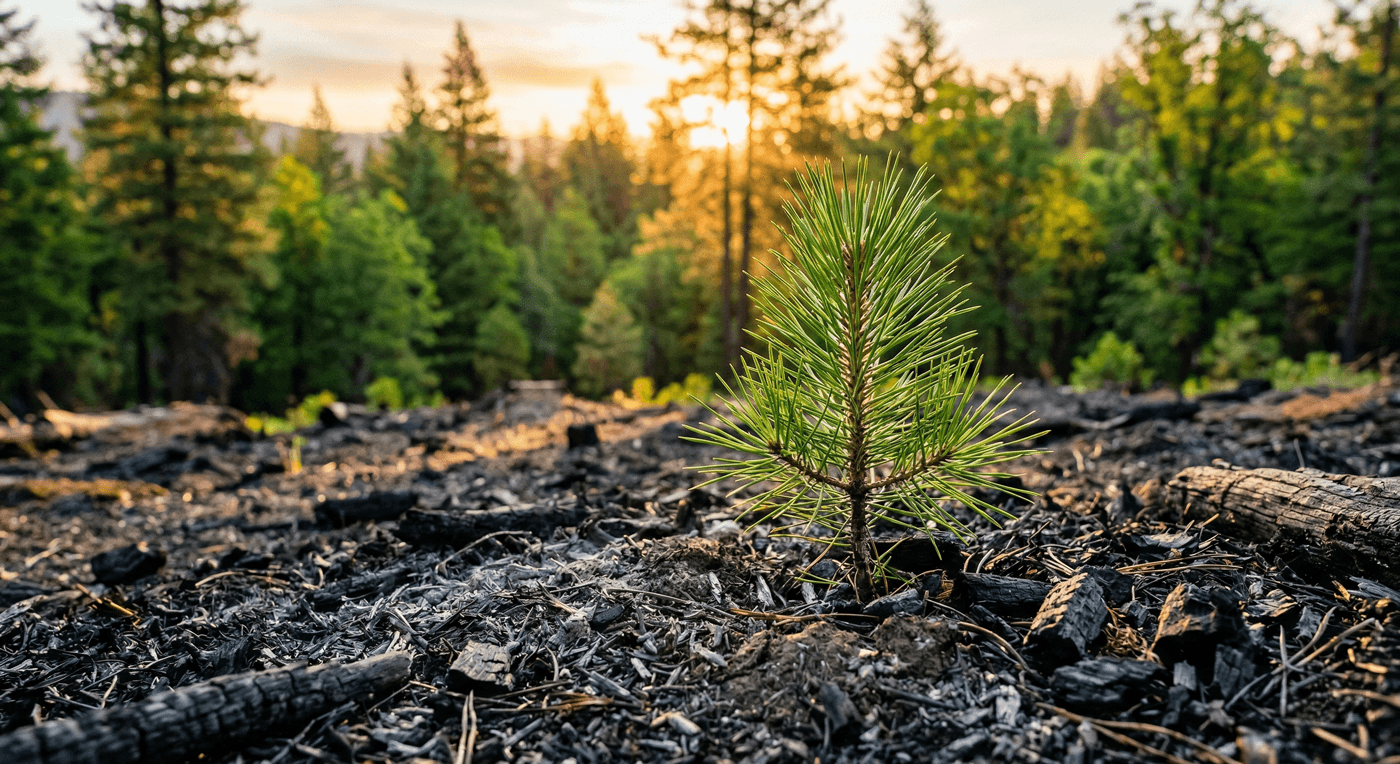 Read More
This Earth Day, are you looking for a gift that truly makes a difference? While traditional gifts can feel temporary, there's a way to celebrate the planet that creates a lasting legacy of healing and growth. Instead of a symbolic gesture, you can give a gift that actively helps restore our nation's forests.
Earth Day tribute tree gifts offer something different: a way to celebrate while actively restoring the forests that wildfires and disease have damaged. Your gift helps plant a tree in a National Forest, creating a living tribute that grows stronger each year while helping nature recover.
Why an Earth Day Tree Gifting Matters
-
It's a lasting tribute: Unlike other gifts, your tree grows for generations as a living symbol of your thoughtfulness. Win
-
It has a real impact: Your gift directly supports reforestation in U.S. National Forests damaged by wildfire and disease. Win.
-
It's deeply personal: A personalized certificate honors someone special while contributing to environmental healing. Win.
What Does It Mean to Give an Earth Day Tribute Tree?
An Earth Day tribute tree gift is a way to celebrate the planet by planting a real tree in someone's honor. Unlike flowers that fade or cards that get tucked away, these gifts create a living legacy that grows for generations in U.S. National Forests.
Each one supports reforestation efforts in areas recovering from wildfire, disease, or deforestation. When you give a tribute tree gift, you receive a personalized certificate with the recipient's name, your message, and details about where trees are being planted.
Why Tribute Trees Are the Perfect Earth Day Gift
Earth Day calls for action that truly matters. Tribute trees answer that call by combining heartfelt recognition with real environmental healing.
A Lasting Alternative to Traditional Gifts
Traditional Earth Day gifts often end up in landfills or fade within days. A tribute tree grows stronger each year, creating a living reminder of your thoughtfulness. While flowers wilt and decorations collect dust, your tree will stand tall for decades, filtering air, providing habitat, and storing carbon.
Real Environmental Impact You Can Trust
Every tribute tree is planted through partnerships with the U.S. Forest Service and trusted nonprofit reforestation organizations. Professional tree planting crews work under Forest Service supervision to restore areas damaged by wildfire, insect infestations, and severe weather.
Your gift provides actual seedlings that stabilize soil, prevent erosion, and rebuild ecosystems where nature needs them most. Your gift directly supports forest restoration projects across the country.
A Meaningful Way to Honor Someone Special
You can honor a friend's commitment to conservation, recognize a teacher's dedication, or simply celebrate Earth Day itself.
Each certificate can be personalized with names and messages, transforming a reforestation project into a deeply personal gift. This connection makes your tribute a deeply personal and sincere gesture.
How Your Earth Day Tree Gift Helps Restore Forests
When you plant a tribute tree, you become part of a nationwide effort to heal America's forests. Your gift addresses urgent environmental challenges while creating hope for the future.
Supporting Wildfire Recovery Efforts
Wildfires have burned vast areas across Western states, leaving behind barren landscapes vulnerable to flooding and erosion. Tribute trees help replant these burned areas with native species like ponderosa pine, Douglas-fir, and other trees suited to each region's climate.
These seedlings take root in ash-enriched soil, beginning the slow work of rebuilding what fire destroyed. Each tree planted helps stabilize slopes, reduce runoff, and protect watersheds that communities depend on.
Partnering with the U.S. Forest Service
Your tribute tree is planted through verified partnerships that ensure every seedling goes into the ground properly. The U.S. Forest Service identifies priority planting areas and oversees restoration projects from start to finish.
Professional crews plant during optimal seasons, typically spring or fall, when seedlings have the best chance to establish strong roots. For certain community-level projects, volunteers and members of the public may also assist in planting efforts.
Rebuilding Native Habitats for Wildlife
Restored forests provide essential homes for countless species. Birds return to nest in young trees, deer browse on new growth, and endangered species find refuge in recovering woodlands. Your tribute tree contributes to this ecological healing, creating habitat that will support wildlife for generations.
Where Tribute Trees Are Planted in National Forests
Tribute trees grow in protected public lands across the United States. These forests belong to all Americans and serve as vital natural resources for wildlife, water quality, and climate stability.
Forests Recovering from Wildfire
Many plantings occur in Western states where recent wildfires have caused severe damage:
-
California's Sierra Nevada ranges
-
New Mexico's Carson National Forest
These regions need new trees to restore what was lost. Each planting project focuses on areas where natural regeneration alone cannot keep pace with the scale of damage.
Areas Affected by Disease and Deforestation
Beyond fire, forests face threats from bark beetles, invasive pests, and disease outbreaks that kill mature trees. Tribute trees help replant these affected areas with healthy, native seedlings selected for their resilience. Eastern forests recovering from pest damage and mountain regions facing climate-related stress both benefit from strategic replanting efforts.
What Your Recipient Receives with a Tribute Tree Gift
Every tribute tree gift includes a tangible keepsake that honors your gesture. These certificates transform an environmental contribution into a personal treasure.
Personalized Tribute Certificate
Each certificate features the recipient's name, your custom message, and details about where trees are being planted. You can share why this gift matters to you, creating a meaningful connection between the recipient and the forest being restored.
For an even more lasting presentation, certificates can be displayed in a glass frame that turns your tribute into a beautiful piece of home decor. This framed option provides a visible reminder of your gift that can be treasured for years.
Digital or Mailed Delivery Options
You choose how your gift arrives:
-
Digital delivery: Certificates are emailed directly to the recipient, perfect for last-minute Earth Day gifts
-
Mailed certificate: Printed keepsakes arrive by mail, providing a physical reminder they can hold and display
Both options ensure your tribute reaches its recipient with care and thoughtfulness.
How to Give an Earth Day Tribute Tree Gift
Planting a tribute tree takes just minutes. The process is designed to be simple and stress-free, even during busy times.
1. Choose a Tribute Tree or Grove
You can plant a single tree or select a grove of multiple trees for greater impact. Groves work beautifully for group gifts, corporate recognition, or when you want to make a more substantial contribution to forest restoration.
2. Add a Personalized Message
Write a heartfelt note that will appear on the certificate. Share why you chose this gift, what Earth Day means to you, or how the recipient inspires you to care for the planet.
3. Select Your Delivery Method
Decide whether you want the certificate emailed immediately or mailed as a printed keepsake. Digital delivery works perfectly for Earth Day itself, while mailed certificates provide a lasting physical reminder.
4. Send Your Gift
Send your gift, knowing that your tribute will be delivered and your trees will be planted during the next appropriate planting season. The entire process takes just a few minutes but creates impact that lasts for decades.
Earth Day Tree Gifts for Groups and Organizations
Tribute trees work beautifully for holidays & special occasions. Organizations of all sizes use them to recognize Earth Day in meaningful ways.
Corporate Earth Day Appreciation Gifts
Companies can honor employees, thank clients, or celebrate sustainability milestones with tribute trees. These gifts demonstrate genuine environmental commitment while avoiding wasteful promotional items.
Schools and Classroom Celebrations
Teachers can engage students in Earth Day learning by planting trees as a class. Each student receives recognition for participating in real environmental action, creating a memorable lesson about stewardship and responsibility.
Community and Religious Groups
Congregations, clubs, and community organizations can pool resources for community tree planting. These collective tributes strengthen group bonds while making a visible difference in forest restoration efforts.
Create a Living Tribute This Earth Day
This Earth Day, your gift can do more than mark the occasion. It can help heal forests, restore wildlife habitats, and create a legacy that grows stronger each year.
From the mountains of Colorado to the forests of Arizona and beyond, native trees are being planted across fire-impacted landscapes to restore what was lost. When you plant a tribute tree, you're not just celebrating the planet but actively helping it recover and thrive.
Plant a tree in honor or memory of someone and send a personalized card or certificate.
Earth Day and Memorial Trees: Honoring Loved Ones While Healing the Planet
-
-
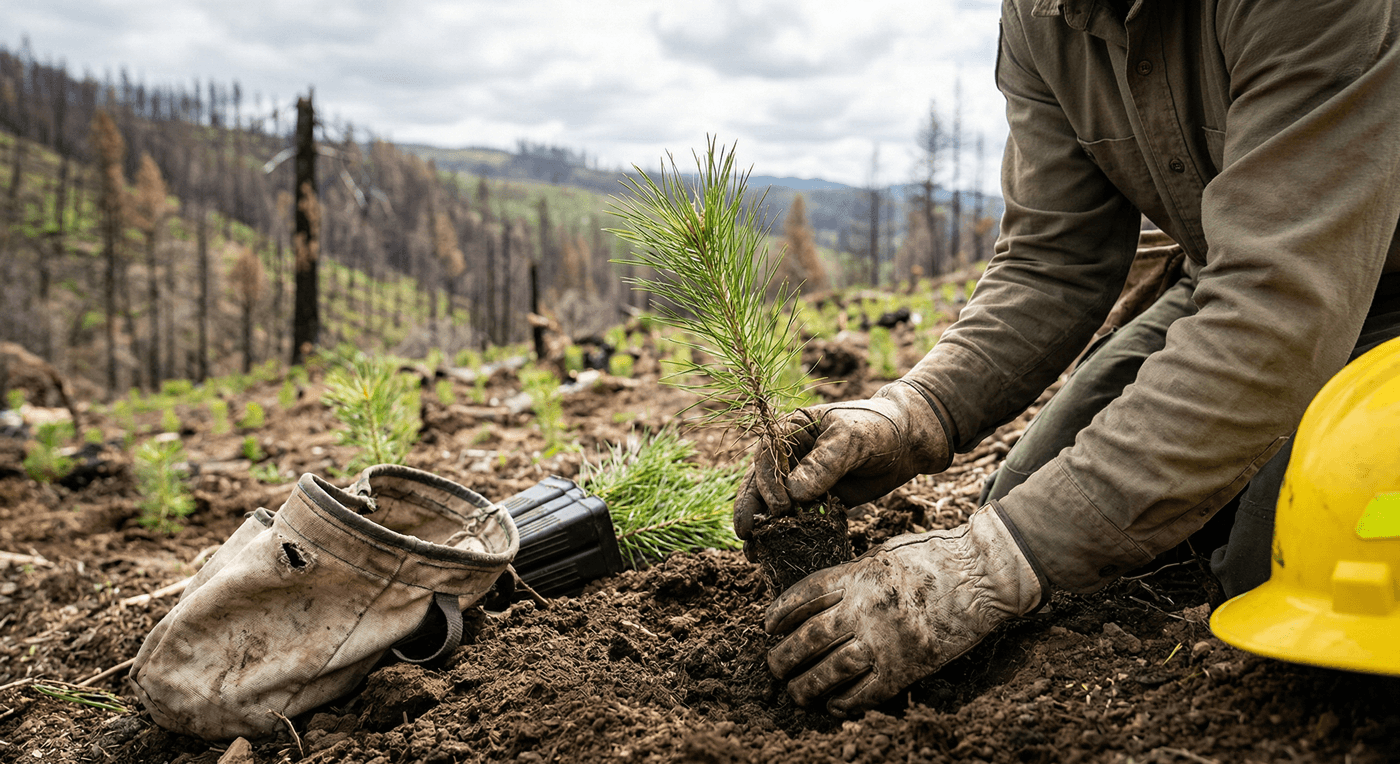 Read More
When a forest is lost, the silence can feel overwhelming. A landscape that was once full of life may look barren and empty. But even in the quietest, most desolate places, hope is not lost. Beneath the surface, a process of renewal is waiting to begin.
This healing journey is called reforestation. It’s a story of nature’s resilience and the compassionate work of people dedicated to helping forests grow again. Let's explore how this process unfolds and brings new life to the land.
What is reforestation and why does it matter
Reforestation is the process of replanting trees in areas where forests once stood but have been lost to fire, disease, or human activity. It differs from afforestation, which plants trees in areas that were never forested before.
Forest regeneration is the broader term that describes how forests recover, whether naturally or with human help. When forests return, they bring hope, renewal, and a legacy that lasts for generations.
Why Do Our Forests Need Our Help to Recover?
Forests cannot always recover on their own after severe damage. When the land is too damaged or seed sources are gone, nature needs a helping hand.
Wildfires and natural disasters
Wildfires, hurricanes, and droughts can destroy large stretches of forest in a matter of days. Fire-damaged soil often loses the nutrients and seed banks needed for natural regrowth. Without intervention, these burned landscapes may remain barren for decades.
Deforestation from agriculture and development
What are some causes of development deforestation? Clearing land for farming, livestock, logging, mining, and urban development all contribute to deforestation. Methods like clear-cutting and slash-and-burn agriculture strip away trees and topsoil, making natural recovery nearly impossible without replanting.
Disease and pest damage
Insects and tree diseases can devastate entire forest ecosystems. When pests kill large numbers of trees, the forest loses its ability to regenerate naturally.
How natural forest regeneration works
Under the right conditions, forests can heal themselves over time. This natural process depends on healthy soil, available seeds, and a climate that supports new growth.
Seed dispersal and germination
Seeds spread through wind, water, and animals like birds and squirrels. When seeds land in suitable soil with enough moisture and sunlight, they germinate and begin to grow.
Ecological succession over time
Ecological succession is the gradual process where plant communities change and develop. Pioneer species like grasses and shrubs grow first, preparing the soil for larger trees. Over many years, the forest slowly rebuilds itself, layer by layer.
When natural recovery is not enough
Severe soil damage, the loss of nearby seed sources, or harsh climate conditions can prevent natural regrowth. When these factors are present, forests need human help to recover.
The Steps of Assisted Reforestation
When a forest needs a helping hand, assisted reforestation is how we bring it back to life. Professional tree planters, the U.S. Forest Service, and the nonprofit partners work together to restore damaged land.
1. Site assessment and prioritization
Experts evaluate damaged land to determine where planting will be most effective. They consider soil health, water access, and the surrounding ecosystem to focus efforts on areas that need help most.
2. Native seedling selection and sourcing
Tree species are chosen to match the local ecosystem. Seeds are often collected from nearby forests to ensure the new trees are adapted to local conditions.
3. Professional tree planting
Contracted professional planters typically carry out the work, often under the supervision of the U.S. Forest Service or through nonprofit partners. They plant seedlings by hand, ensuring each tree is placed at the right depth and spacing. On certain community projects, volunteers may also assist in planting efforts.
4. Monitoring and long-term care
After planting, crews protect seedlings from competing vegetation and track survival rates over several years. This ongoing care ensures that young trees grow strong and healthy.
Where reforestation projects take place in the United States
Reforestation efforts are happening across the country, from wildfire-damaged Western forests to recovering landscapes in the East. These projects focus on areas where forest destruction has occurred and where restoration will have the greatest impact.
U.S. National Forests
U.S. National Forests are a primary focus for federal reforestation efforts. The U.S. Forest Service manages these public lands and oversees large-scale planting projects that provide critical habitat for wildlife and clean water for communities.
Wildfire recovery areas
Many reforestation projects focus on areas damaged by recent wildfires, particularly in Western states:
-
Arizona's Apache-Sitgreaves National Forests
-
Colorado's Pike and San Isabel National Forests
After fires, crews plant native trees to stabilize soil, prevent erosion, and restore habitat.
State and community forests
Reforestation also occurs in state forests and through community-level initiatives. Local organizations and volunteers often partner with state agencies to restore smaller areas, bringing communities together to create lasting environmental benefits.
How long does it take for a forest to regenerate
Forest recovery varies based on damage severity, climate, and the species planted. Some forests show signs of life within a few years, while others take decades to fully mature. Even young trees provide immediate benefits by stabilizing soil and supporting wildlife.
Factor
Faster Recovery
Slower Recovery
Soil condition
Healthy, intact soil
Severely eroded or burned soil
Seed availability
Nearby seed sources present
No natural seed bank remaining
Climate
Adequate rainfall and mild temps
Drought or extreme weather
Human intervention
Active planting and monitoring
Left entirely to nature
How reforestation helps reverse deforestation and heal the planet
Reforestation does more than replace lost trees. It reverses the damage caused by deforestation and creates a healthier planet for future generations.
Carbon storage and climate benefits
Trees absorb carbon dioxide from the air as they grow, helping to address climate change. Forests act as natural carbon storage systems, removing greenhouse gases and cooling the planet.
Wildlife habitat and biodiversity
Restored forests provide homes for birds, mammals, insects, and plants. As trees mature, they create the complex habitats that endangered species need to survive.
Soil health and watershed protection
Tree roots stabilize soil and prevent erosion, especially on steep slopes. They also filter water as it moves through the ground, improving water quality for communities downstream.
A Legacy of Hope and Healing
Reforestation is more than just planting trees; it's an act of profound hope. It’s a promise to future generations that we will care for the planet, restore what has been lost, and create a legacy of life and renewal. Each new tree is a step toward a healthier world, offering clean air, pure water, and a home for countless creatures.
How to support reforestation by planting a memorial tree
You can become part of this healing process by planting a memorial tree through A Living Tribute.
Each planting includes a personalized certificate with your loved one's name and a custom message, creating a lasting tribute that honors their memory. You can display your certificate in a glass frame that serves as a beautiful keepsake.
Planting a memorial tree is a meaningful alternative to flowers. While flowers fade, a tree grows and heals both hearts and forests for generations to come.
Create a living tribute to honor someone special or just to help out your local state forests!
From Barren Ground to New Beginnings: How Reforestation Happens
-
-
 Read More
The memory of someone you love deserves a tribute that lasts. A memorial tree creates a living legacy that honors them while helping restore forests for generations to come.
Most people are surprised to learn that memorial tree planting costs less than sending traditional sympathy flowers. This guide walks you through what affects memorial tree planting costs and what each price point typically includes. You will also learn the lasting benefits a tribute provides for your family and the environment.
How Much Does It Cost to Plant a Memorial Tree?
Memorial tree planting typically starts at $9.95 for a digital certificate and single tree, planted in a U.S. National Forest through a verified reforestation partner. Adding a mailed card, custom photo card, or framed display increases the price. Bundling several trees into a memorial grove lowers the cost per tree instead.
That starting price covers the tree planting itself, working with a reputable reforestation organization rather than a private landscaping service. A Living Tribute plants trees in U.S. National Forests, so your tribute supports real reforestation instead of a symbolic gesture.
Basic packages include the tree planting alone. Premium options add a personalized certificate, a custom message, or a framed display. Digital certificates are usually included at no extra charge. Mailed or framed versions raise the total.
Memorial Tree Pricing by Tribute Type
Where and how you plant a memorial tree changes the cost a lot. The table below breaks down the most common tribute types and what each one typically includes.
Tribute Type
Typical Starting Price
What's Included
Single memorial tree
$9.95
One tree planted in a U.S. National Forest, digital certificate
Mailed or photo certificate
Add-on pricing
Printed card or photo card mailed to the recipient
Memorial grove (5+ trees)
Reduced per-tree cost (10 trees is under $6 per tree; 500 trees is $0.50 per tree)
Multiple trees bundled for family or group tributes
Corporate and group tributes
Custom quote
Bulk trees, custom cards, coordinated delivery for teams
Single Trees and Memorial Groves
A single tree is the most affordable way to plant a memorial tree, and standard pricing applies per tree. Choosing multiple trees often reduces the per-tree cost through bundling.
Memorial groves, five or more trees planted together, provide the best value for family group plantings or workplace tributes. A grove also lets several people contribute to one shared tribute instead of ordering separate certificates.
Private-property plantings through landscaping services are usually far more expensive by comparison. Trees planted through a reforestation organization in public forests stay affordable because the cost is shared across a larger planting program.
Certificates and Delivery Options
You can enhance a tribute with commemorative extras like printed certificates, glass display frames, or custom photo cards. Choosing digital delivery instead of a physical certificate keeps the cost lower while still creating a meaningful, eco-friendly tribute.
Transparent pricing means understanding exactly what you are paying for. A memorial tree tribute typically breaks down into three parts:
-
Tree planting: The cost of the seedling and professional planting labor.
-
Certificate: Personalization, printing, and delivery fees for physical options.
-
Program support: Working with reforestation partners to manage and plan the project.
Ways to Optimize Your Budget
Bundling multiple trees together provides better value than ordering them separately. If you are honoring someone as a family or group, combine your gifts into one memorial grove instead of several single-tree orders.
Choosing a digital certificate instead of a mailed option also helps you stay within budget. You can print the certificate yourself or display it on a digital frame at home, so the savings do not cost you the keepsake.
The Benefits of a Memorial Tree for Families and the Environment
Planting a memorial tree offers emotional comfort because it creates something living that can be cherished for decades. Families often find peace knowing their loved one's memory contributes to restoring forests in the places that need healing most.
These trees also deliver real reforestation benefits. A single tree improves air quality, protects groundwater, and creates habitat for wildlife. Multiplied across a National Forest, tree planting helps stabilize soil, reduce erosion, and support the recovery of land damaged by wildfire or disease.
Long-Term Significance
Trees grow over decades, offering a living reminder of your loved one's legacy. As the tree matures, it becomes part of a thriving forest. Future generations will benefit from it, even without knowing why it was planted.
Group memorials let families or communities plant several trees together, creating a shared space of remembrance. This turns individual grief into collective healing while multiplying the environmental impact.
How to Choose a Reputable Memorial Tree Planting Service
A memorial tree planting service is legitimate when it names its conservation partners, explains exactly where your tree will be planted, and offers transparent, itemized pricing rather than a single bundled fee. Look for services that partner with established organizations rather than vague claims of "eco-friendly" planting.
A Living Tribute plants trees through the U.S. Forest Service and named conservation partners, including the National Forest Foundation (an NFF partner since 2014) and American Forests, the nation's oldest conservation organization. Contracted, professional tree planters do the physical work under U.S. Forest Service supervision, and trees go into U.S. National Forests recovering from wildfire, disease, or past deforestation. Over 1 million acres of National Forest land currently need replanting, so a verified tribute is planted where it makes a measurable difference.
Transparent pricing helps you understand exactly what you are paying for. Ask a provider to break down tree planting costs, certificate costs, and any administrative fees separately, rather than quoting one number with no explanation.
Trees are not individually tracked with GPS coordinates, and National Forest plantings do not include physical signs, plaques, or markers. That is a normal part of how active reforestation works within a National Forest. It is not a shortcoming, and a reputable service should explain it to you upfront.
Questions to Ask Before Planting Your Tribute
Before choosing a service, ask whether the certificate can be personalized with your loved one's name and a custom message. Ask whether you will receive confirmation once the tree is planted. Trees are typically planted during spring and fall. Knowing this timeline helps you coordinate your tribute with a memorial service or a meaningful anniversary. For more detail on how the process works from start to finish, browse all memorial tree tributes or visit our frequently asked questions.
How to Create Your Memorial Tree Tribute: A Simple Guide
Creating a living memorial is a straightforward process. Here is how it works, start to finish.
-
Choose your tribute. Decide between a single tree or a memorial grove with multiple trees for a larger impact.
-
Add a personal touch. Personalize the certificate with your loved one's name and a custom message, quote, or memory.
-
Select your certificate. Choose a digital certificate for immediate delivery, or a mailed, framed certificate for a lasting keepsake.
-
Coordinate the timing. If sending as a gift, time the certificate's arrival to coincide with a memorial service or a meaningful anniversary.
Frequently Asked Questions
How much does it cost to plant a memorial tree? A memorial tree typically starts at $9.95 for a single tree and digital certificate. Mailed cards, photo cards, and framed displays cost more, while memorial groves of five or more trees lower the price per tree.
Is memorial tree planting legitimate? Yes, when the provider names its conservation partners and explains where the tree is planted. A Living Tribute plants trees in U.S. National Forests through the U.S. Forest Service, the National Forest Foundation, and American Forests, with professional planters working under Forest Service supervision.
What is included in a memorial tree tribute? A standard tribute includes the tree planting and a personalized certificate with your loved one's name and message. Premium tiers add a mailed card, a photo card, or a framed display for an additional cost.
What is the price range for memorial trees? Single trees start around $9.95. Memorial groves of five or more trees typically cost less per tree than ordering them separately. Corporate or group tributes are available at a custom quote.
Can I plant more than one tree for a group tribute? Yes. Families, coworkers, and community groups can combine individual gifts into one memorial grove. This lowers the per-tree cost and creates one shared tribute instead of several separate certificates.
A Renewing Legacy
Memorial tree planting helps grieving hearts while renewing forestland for generations to come. When you are ready to honor someone special, A Living Tribute plants trees in U.S. National Forests through verified partnerships with the Forest Service and named conservation organizations.
Professional tree planters work under Forest Service supervision, planting each tree with care in areas recovering from wildfire, disease, or deforestation. Your tribute includes a personalized certificate, delivered by mail or digitally, with the option of a framed display for a lasting keepsake.
Plant a tree in honor or memory of someone and send a personalized card or certificate.
Understanding Memorial Tree Planting Costs & Benefits
-
-
 Read More
Your heart races. Your chest feels heavy. Your muscles ache in ways they never have before, and exhaustion follows you through every hour of the day.
These physical symptoms of grief can feel confusing and even frightening, but they're your body's natural response to profound loss. Understanding what's happening in your body and knowing when these symptoms require extra support can help you move through this difficult season with more clarity and care.
In this article, we'll explore:
-
Why grief causes physical symptoms like fatigue and body aches
-
Common ways your body responds to loss
-
Gentle, practical ways to care for yourself
-
When to seek professional support for your symptoms
What Is Grief and Why Does It Affect the Body?
Grief is your body and mind's natural response to loss, and it touches far more than your emotions. When you lose someone you love, your brain releases stress hormones like cortisol that can weaken your immune system and trigger physical changes throughout your body. These physical symptoms are a normal part of how humans process deep loss, not a sign that something is wrong with you.
What Are the Common Physical Symptoms of Grief?
Your body may respond to grief in ways that surprise you. Each person's experience is different, but certain physical manifestations appear frequently during the grieving process.
Grief Fatigue And Low Energy
Grief fatigue can leave you feeling exhausted even after a full night's sleep. The emotional weight of loss disrupts your natural sleep cycles and drains the energy your body needs for daily tasks. You might find yourself struggling to get out of bed or feeling too tired to complete simple activities you once managed easily.
Sleep Disturbances
Many people experiencing grief find themselves unable to fall asleep, waking frequently during the night, or sleeping far more than usual. Your mind may race with memories or worries when you try to rest.
Digestive Upsets
Loss of appetite, nausea, and stomach aches are common physical responses to grief. You might feel too upset to eat, or food might not taste the way it used to.
Grief Body Aches And Muscle Tension
Grief body aches often settle into your muscles as tension headaches, neck pain, or shoulder stiffness. The stress hormones flooding your system can amplify these aches, making your whole body feel sore and heavy.
Chest Tightness Or Palpitations
A tight feeling in your chest or a racing heartbeat can be frightening, but these sensations are common during grief. The phrase "heartache" exists because emotional pain truly can feel physical in your chest.
How Can I Gently Manage the Physical Symptoms of Grief?
Small, gentle steps can help your body process grief more comfortably. These practices won't erase your pain, but they can ease some of the physical burden you're carrying.
Gentle Movement And Deep Breathing
Even five minutes of slow walking, simple yoga stretches, or tai chi movements can reduce muscle tension and help you feel more grounded. Deep breathing exercises calm your nervous system and remind your body that it's safe.
Consider these gentle activities:
-
Short walks around your neighborhood or a nearby park
-
Simple stretching while sitting or lying down
-
Light gardening or time spent outdoors
Nutrient-Rich Meals And Hydration
Your body needs fuel to process grief, even when you don't feel hungry. Small, frequent meals with fruits, vegetables, and protein can boost your energy and support emotional balance. Drinking enough water throughout the day helps your body function better during this difficult time.
Finding Grief Support
Talking with friends, family members, or grief support groups gives your emotions a place to go instead of staying trapped in your body. Sharing stories and expressing how you feel can release some of the physical tension grief creates. Online communities and local support groups offer connection when you need it most.
Self-Compassion Breaks
Set aside time each day for mindful rest, even if it's just ten minutes. You might try journaling about your feelings, listening to soothing music, or simply sitting quietly with your thoughts.
Brief Moments Of Remembrance
Creating a meaningful tribute can help you feel connected to the person you've lost while giving you a gentle, purposeful activity. Planting a memorial tree in a U.S. National Forest offers a living symbol of renewal and growth.
When Should I Seek Professional Help for Grief Symptoms?
Some physical symptoms signal that you need professional support beyond self-care. Coping with grief becomes more challenging when certain warning signs appear.
Reach out to a mental health professional if you experience:
-
Prolonged insomnia: Lasting for weeks without improvement
-
Severe weight changes: Significant loss or gain that concerns you
-
Persistent physical pain: That doesn't improve with rest or care
-
Thoughts of self-harm: Any thoughts about hurting yourself
Counselors and therapists who specialize in grief can offer tools and guidance that make a real difference. Seeking help is an act of self-care, not a sign of weakness.
A Hopeful Next Step
Physical symptoms of grief remind you that loss touches every part of who you are. Acknowledging these body-based responses and taking small, caring actions can ease some of the burden you're carrying.
As you move through this difficult time, consider creating a lasting tribute that honors your loved one's memory while supporting the healing of forests across the country. When you plant a memorial tree through A Living Tribute, professional tree planters work with the U.S. Forest Service to restore areas damaged by wildfire and deforestation in U.S. National Forests.
Each tree grows as a living symbol of renewal, and you'll receive a personalized certificate with your loved one's name that can be displayed in a glass frame. Your gesture makes a lasting difference for generations to come.
Plant a tree in their memory and help restore forests while honoring the life of someone you love.
Important Disclaimer: A Living Tribute is not a licensed medical professional, mental health counselor, therapist, or healthcare provider. The information provided in this article is for general educational and informational purposes only and does not constitute medical, psychological, or professional health advice, diagnosis, or treatment. You should not rely on this content as a substitute for professional medical advice, mental health counseling, diagnosis, or treatment. Always seek the advice of your physician, licensed therapist, or other qualified health provider with any questions you may have regarding a medical or mental health condition. Never disregard professional medical advice or delay seeking it because of something you have read in this article. If you are experiencing a medical or mental health emergency, including thoughts of self-harm, please call 911 or your local emergency services immediately. A Living Tribute expressly disclaims any and all liability for any actions taken or not taken based on the content of this article.Why Your Body Aches When You're Grieving: Understanding the Physical Symptoms of Loss
-
-
 Read More
Going back to work after losing someone takes a kind of courage most people never expected to need. Your responsibilities did not pause when your world did, and figuring out how to return to work after bereavement means navigating the ordinary while carrying an extraordinary weight.
Most workplaces are not built for grief. This guide offers a compassionate, realistic approach to going back to work after the death of someone you loved. You will find help with knowing when you are ready, a phased reentry plan, scripts for talking with colleagues, and email templates for telling your team. If you are the colleague or manager of someone coming back, there is a section for you too, because what you say in those first few minutes matters more than you might think.
Why returning to work after bereavement feels different
Grief is not only sadness. It changes how you think, sleep, and concentrate, and those changes do not switch off at the office door. Research shared by Harvard Business Review on returning to work while grieving describes how loss disrupts focus, memory, and energy long after the funeral is over.
The scale of that disruption is often underestimated. Surveys of grieving employees have found that the large majority report a meaningful drop in productivity after a loss, and grief commonly affects concentration and cognitive function for six months to a year, sometimes longer. Yet most U.S. employers offer only three to five days of bereavement leave. The gap between what grief actually requires and what work allows is the heart of why returning feels so hard.

Naming that gap helps. You are not failing at your job because focus comes slowly or emotion arrives without warning. You are doing something genuinely difficult, and expecting yourself to perform exactly as before is neither realistic nor kind.
How to know when you're ready, and the risk of going back too soon
There is no universal timeline, and going back to work too soon after bereavement can deepen grief rather than distract from it. Still, some signals suggest a structured return may help, while others suggest you need more time.
A return may be steadying when:
-
The most urgent arrangements are behind you.
-
You feel restless at home and want the rhythm of routine.
-
Short, predictable tasks feel manageable, even if hard.
It may be too soon when:
-
You are still in acute shock or barely sleeping.
-
You feel numb, detached, or unable to track a conversation.
-
The thought of being seen or spoken to feels unbearable.
If you are leaning toward "not yet," that instinct deserves respect. Returning before you are ready rarely helps anyone, and a few more days of leave often costs far less than weeks of running on empty.
How to plan a phased return to work after bereavement
A phased return to work after bereavement means easing back gradually instead of resuming full duties on day one. Many employers will accommodate one if you ask directly. A simple structure many people find workable:
-
Week one: Half-days or three shorter days, focused on low-stakes, administrative tasks.
-
Week two: Four fuller days with a lighter overall workload and no major deadlines.
-
Week three onward: A gradual return to normal duties, adjusting the pace as you go.
Treat this as a starting point, not a rule. Ask your manager or HR about flexible hours, working from home on harder days, or shifting a deadline. Framing the request around staying effective, rather than asking for a favor, usually makes the conversation easier for everyone.
What to say when you return, including bereavement email templates
Deciding what to share, and with whom, is one of the most draining parts of going back. You are allowed to keep things brief. A simple line such as "Thank you for your kindness during a hard time. I am focusing on easing back in" sets a gentle boundary while acknowledging people's care.
Scripts for speaking with colleagues
-
To a manager: "I am glad to be back. I may need a little more time on some tasks while I find my footing, and I will keep you posted."
-
To a close coworker: "Thank you for thinking of me. I would rather focus on work today, but I appreciate you."
-
To anyone who asks how you are: "Some days are harder than others. Thank you for asking."
Returning to work after bereavement: email templates
If you would rather write than speak, these templates make a returning to work after bereavement email easier to send. Copy one and adjust the details to fit your situation.
Template 1, to your team:
Subject: Returning to the office on {date}
Hi {team},
I wanted to reach out before my return on {date}. The support you have shown during this time has meant a great deal, and I look forward to reconnecting with everyone.
I will be easing back in gradually and may need a bit more time than usual on some tasks. I appreciate your patience as I find my footing. Please feel free to reach out with any questions or updates in the meantime.
Thank you, {your name}
Template 2, to your manager:
Subject: Return-to-work plan, {your name}
Hi {manager's name},
I wanted to connect before I return on {date} to discuss the best approach for my first week back. I would appreciate starting with a lighter workload as I re-acclimate, and would welcome your guidance on where to focus.
I am grateful for the flexibility the team has extended. If it would be helpful, I am happy to schedule a brief call to walk through any adjustments before I come back.
Thank you, {your name}
Template 3, a short note to a close colleague:
Hi {name},
I will be back in the office on {date}. I am looking forward to seeing familiar faces, though I may be quieter than usual as I settle back in. Thanks for being one of the people who made this a little easier.
{your name}
What to say to someone returning to work after a loss
If you are welcoming back a colleague who has been grieving, the kindest thing you can do is also the simplest. People often stay silent for fear of saying the wrong thing, and that silence can feel like the loss is being ignored.
Keep it short, warm, and free of pressure:
-
"It is good to see you. I am here if you need anything, and I completely understand if you would rather just focus on work."
-
"I am so sorry for your loss." If you knew the person who passed away, using their name can mean a great deal.
-
"No need to reply. I just wanted you to know I am thinking of you."
A few things to avoid:
-
Platitudes such as "everything happens for a reason" or "they are in a better place."
-
Detailed questions about what happened or how they are coping.
-
Acting as though nothing has changed, which can feel as painful as too much attention.
Then follow their lead. Some people want to talk; others want the relief of normal work. Checking in quietly a few weeks later, once the initial wave of sympathy has faded, is often when support matters most. Managers who want a fuller framework can explore how to build lasting support for grieving employees into the workplace.
Setting limits on your time and emotional energy
Returning does not mean being endlessly available. Grief is depleting, and protecting your energy is part of doing your job well, not a retreat from it.
A few boundaries that help:
-
Block short buffers between meetings to breathe, walk, or simply reset.
-
Identify a private spot, even a parked car or a quiet stairwell, where you can step away if emotion rises.
-
Decide in advance how much you want to share, and give yourself permission to say "I would rather not get into it today."
-
Keep a steady daily routine, including meals and rest, which gives shapeless days some structure.
You do not owe anyone a performance of being fine. Pacing yourself now is what makes a sustainable return possible.
Going back to work after losing a parent, spouse, or child
Every loss is different, and the relationship shapes what returning feels like.
After the death of a parent, grief can be tangled with practical weight, settling affairs, supporting other family members, and absorbing a shift in your sense of who you are. Returning to work after the death of a parent often means functioning while quietly managing a great deal behind the scenes. Give yourself room for that.
After losing a spouse or partner, the loss reaches into daily life in countless ways, and work may be one of the few places that still feels familiar, or one of the hardest to face. There is no wrong response. Lean on whatever steadiness routine can offer without forcing it.
After the death of a child, returning can feel almost impossible, and there is no timeline that applies. Be especially gentle with expectations, lean on bereavement leave and any extended options available, and return only when and how feels survivable.
In every case, professional support can help. A grief counselor, a support group, or your employer's assistance program can carry some of the weight that work cannot.
How long is bereavement leave, and what are your options?
Bereavement leave is paid or unpaid time off granted after the death of a loved one, and in the United States there is no federal law requiring it. Most employers offer three to five days for an immediate family member, though policies vary widely, and a handful of states have enacted their own bereavement leave laws.
If you need more time, you have more options than a standard policy suggests:
-
Ask HR about extended or unpaid leave beyond the standard allowance.
-
Explore the Family and Medical Leave Act, which can provide job-protected leave in qualifying situations.
-
Ask whether short-term disability or your employer's assistance program applies.
Advocating for the time you need is not a weakness. It protects both your healing and your long-term effectiveness when you do return.
Finding meaning while moving forward
Returning to work is one milestone in grief, not the end of it. For many people, finding a meaningful way to honor a loved one becomes part of how they carry the loss forward.
A growing number choose a tribute that lasts. Planting a memorial tree in a U.S. National Forest creates a living tribute that grows in a loved one's name, planted by professional foresters working under the supervision of the U.S. Forest Service through long-standing partnerships with the National Forest Foundation and American Forests. Unlike flowers that fade within days, a tree keeps growing, season after season.
You can plant a memorial tree with a personalized certificate, choose a redwood planted in their memory, or explore other meaningful ways to honor a life. For some, having something living to tend gives grief a gentle place to go.
Frequently asked questions
How long should bereavement leave last before returning to work?
There is no universal standard. Most U.S. employers offer three to five days of bereavement leave for immediate family, though some provide more, and what you are legally entitled to varies by state and employer. If you need additional time, talk with HR about extended leave, short-term disability, or options under the Family and Medical Leave Act (FMLA).What if I'm not ready to go back to work after bereavement?
Not being ready is not a weakness. If you need more time, advocate for it. Talk with your doctor about medical leave options, ask your company's employee assistance program to help facilitate that conversation, and be honest with your manager about where you are. Returning before you are ready can deepen grief and reduce your effectiveness over the long term, for you and for your team.What should I say to someone who is returning to work after a death?
Keep it simple and follow their lead. "I am glad you are back. I am here if you need anything, and I completely understand if you just want to focus on work." Avoid platitudes, unsolicited advice, and detailed questions about what happened. The most helpful thing you can offer is genuine presence without pressure.Does grief get easier when you return to work?
For some people, returning to routine provides structure that makes grief feel more manageable. For others, the workplace becomes a place where grief is suppressed rather than processed, which can extend healing. There is no single answer. What matters most is that your return honors both your responsibilities and your own well-being.What is a phased return to work after bereavement?
A phased return is a gradual reentry plan, typically starting with reduced hours or lighter duties and increasing over one to three weeks. Many employers will accommodate a phased return if you ask directly. It can significantly ease the transition and reduce the risk of burnout during an already depleted period.Honoring their memory as you move forward
There is no right way to return to work after a loss, only the way that lets you keep going while honoring what you carry. Be patient with yourself, ask for the time and flexibility you need, and let routine support you rather than rush you.
When you are ready, you can plant a memorial tree in a U.S. National Forest, a living tribute that grows in their name for generations to come. Honor their memory, and let something keep growing.
Returning to Work After Bereavement: Balancing Grief and Career
-
-
 Read More
Planting a tree in memory of a loved one transforms personal loss into a legacy of healing that continues long after we're gone. The environmental benefits of memorial tree planting transform personal loss into lasting renewal, restoring damaged forests, supporting wildlife, and protecting the planet while honoring those we love.
What Is a Memorial Tree?
A memorial tree is a living tribute planted in honor or memory of someone special. These trees grow in U.S. National Forests through partnerships with the Forest Service and trusted reforestation organizations. When you plant a memorial tree, you receive a personalized certificate that serves as a lasting keepsake, connecting you to the forest where your tribute will grow for generations.
How Do Memorial Trees Benefit the Environment?
Every memorial tree planted contributes real, measurable benefits to the natural world. These trees actively restore ecosystems, clean the air and water, and provide homes for wildlife.
Carbon absorption and climate benefits
Trees absorb carbon dioxide from the atmosphere as they grow, storing it in their wood, roots, and the surrounding soil. This natural process helps reduce the amount of greenhouse gases contributing to climate change. Each memorial tree continues capturing carbon for decades or even centuries, making it a long-term investment in a healthier planet.
Cleaner air and healthier watersheds
Trees act as natural air filters, removing pollutants and releasing fresh oxygen into the atmosphere. Their root systems also protect water quality by filtering runoff before it reaches streams and rivers.
In National Forests, these trees help stabilize streambanks and reduce sediment that can harm aquatic ecosystems. This protection extends to the communities that depend on these watersheds for drinking water.
Wildlife habitat and biodiversity support
Memorial trees provide essential resources for countless species:
-
Providing Shelter: Trees offer safe nesting sites for birds, refuge for mammals beneath their canopy, and protective cover for reptiles and amphibians in their bark and root systems.
-
Offering Food: They produce seeds, nuts, and berries that sustain countless species through the seasons.
-
Connecting the Ecosystem: They host insects and microorganisms that form the foundation of a healthy forest food web.
As these trees mature, they become part of a thriving ecosystem that supports biodiversity across the forest.
Soil health and erosion prevention
Tree roots anchor soil in place, preventing erosion that can lead to landslides and flooding. This is especially important in areas recovering from wildfire or other disturbances. Healthy root systems also improve soil structure, allowing it to absorb and retain water more effectively during storms.
What Is the Symbolism of Planting a Tree in Memory?
Beyond their environmental impact, memorial trees carry deep emotional and spiritual meaning. They offer comfort in times of grief and hope for the future.
Trees as symbols of life and renewal
Trees have long represented growth, strength, and the cycles of life. Their ability to weather storms, adapt to seasons, and continue growing year after year mirrors the resilience of the human spirit.
Planting a tree in memory creates a living connection that endures, offering a sense of continuity and peace. There is comfort in knowing that something living carries forward a loved one's memory.
Cultural traditions of tree planting
Many cultures and faiths around the world have honored life through tree planting for centuries. From ancient groves considered sacred to modern memorial gardens, trees have served as bridges between past and present. These traditions remind us that honoring someone through nature is both timeless and universal.
The personal meaning of living tributes
A memorial tree offers something that cut flowers or static monuments cannot. It grows and changes, just as memories do.
Knowing that a tree stands in a National Forest, contributing to the health of the land, brings comfort that your tribute has lasting purpose. This living memorial creates an ongoing connection rather than fading over time.
How Do Memorial Trees Help Restore Forests After Wildfires?
Memorial trees are often planted in areas recovering from wildfire, disease, or deforestation. A Living Tribute focuses on planting in U.S. National Forests where reforestation is most needed.
Professional tree planters, working under Forest Service supervision, ensure each tree is planted in the right location with the best chance to thrive. These restoration efforts help forests recover their natural structure and function.
In fire-damaged areas, new trees stabilize soil, reduce erosion, and begin rebuilding habitat for wildlife that depends on healthy forest ecosystems. The work continues for years, gradually bringing damaged landscapes back to life.
Why Are Memorial Trees a Meaningful Alternative to Flowers?
While sympathy flowers offer immediate comfort, their beauty is fleeting. Memorial trees provide a different kind of comfort, one that grows stronger with time.
Memorial Trees
Cut Flowers
Grow for generations
Last days to weeks
Support forest ecosystems
Minimal environmental benefit
Personalized certificate keepsake
Typically no lasting memento
Contribute to reforestation
Often discarded after wilting
You receive a personalized certificate with a custom name and message, creating a keepsake that honors your loved one long after flowers would have faded. Your tribute supports active reforestation in protected National Forests, giving back to the land in a way that benefits future generations.
Where Are Memorial Trees Planted in the United States?
A Living Tribute plants exclusively in U.S. National Forests, partnering with the Forest Service and nonprofit reforestation organizations. Trees are planted where they're needed most, including areas affected by wildfire, disease, and other disturbances.
This ensures your memorial tree contributes to real restoration work in protected public lands. Forest professionals select tree species based on what will thrive in each specific location, giving every tree the best chance to grow strong and healthy in its new home.
Plant a Memorial Tree That Grows for Generations
When you are ready to create a living tribute, the process is simple and meaningful. You can plant a tree in honor or memory of someone and send a personalized card that arrives as a lasting keepsake.
Your tribute helps restore forests, support wildlife, and protect the land for those who come after us. It's a gift that offers comfort today and hope for tomorrow, growing stronger with each passing season.
The Lasting Environmental Impact of a Memorial Tree
-
-
 Read More
Grief rarely arrives the way we expect. It comes in waves, shifting between days that feel manageable and moments when the sadness rises without warning. If you have wondered why grief comes in waves instead of fading in a straight line, you are not healing wrong. You are healing exactly the way the human heart is built to heal.
Nature understands this rhythm. Tides rise and recede. Seasons turn from bare branches to new growth. Your grief follows that same quiet logic, carrying you toward calmer water one wave at a time.
What follows is a look at why grief moves in waves, what tends to set them off, and small ways to steady yourself when one rises. And at the end, a lasting way to honor the person you love, so your memory of them can keep growing.
Why Does Grief Come in Waves?
Grief comes in waves because the mind can only take in loss in small doses. When we lose someone we love, feeling the full weight of that loss all at once would be overwhelming, so the brain naturally moves back and forth between facing the pain and finding moments of relief.
Researchers describe this back-and-forth as the dual process model of coping with bereavement. We swing between confronting the loss and stepping back to restore ourselves, and that oscillation is what healthy grieving looks like. The American Psychological Association and other grief specialists note that there is no single correct timeline and no orderly set of stages everyone passes through.
Some days you feel steady and capable. Other days the sadness crashes over you without warning, set off by something small. These waves do not mean you are moving backward. They mean your heart is processing love and loss at a pace it can survive.
Over weeks and months, the waves often grow farther apart and a little gentler. The grief does not disappear. It changes shape, settling into something you learn to carry.
Navigating Common Grief Triggers
Waves of grief usually have a cause, even when they feel like they come from nowhere. A trigger is simply a reminder that reconnects you, suddenly and deeply, to the person you lost. Recognizing the common ones can help you meet the next wave with a little more understanding instead of fear.
Daily Reminders
The most ordinary moments often carry the most weight. A song on the radio, the scent of a familiar meal, a seat at the table, or a route you used to drive together can bring a wave rushing in. These sensory reminders are woven into everyday life, which is why grief can surface in the middle of a normal afternoon.
When a daily reminder catches you off guard, try not to push the feeling away. Let the wave move through you, and remind yourself that the reminder exists because the love was real.
Anniversaries and Important Dates
Birthdays, the date of your loss, wedding anniversaries, and other milestones tend to gather emotion in advance. Many people feel the wave building in the days leading up to a significant date, sometimes more intensely than on the day itself.
Planning ahead can soften these waves. Decide gently how you want to spend the day, who you want beside you, and how you might honor the person you are missing.
Holidays and Special Occasions
Holidays carry expectations of togetherness, which can make an empty chair feel louder. Traditions that once brought joy may suddenly ache. This is one of the most common times for grief to surge, and it is also a meaningful time to create new rituals that hold space for the person who is no longer at the table.
How Can You Cope with Waves of Grief?
You cannot stop the waves of grief, but you can learn to stay steady inside them. The goal is not to make the sadness disappear. It is to move through each wave with care for yourself until it recedes.
Small, grounding practices help most. Slow, structured breathing can settle your body when a wave peaks. Writing in a journal gives your thoughts somewhere to go. A walk outdoors, where the air moves and the light changes, can loosen the tightness that grief leaves in the chest. Many people find that time in nature offers a kind of comfort that words cannot, a reminder that life continues to grow even after great loss.
It also helps to name what you need in the moment. Some waves call for company. Others call for stillness. Neither is wrong. Honoring both your loss and your own need for rest is part of carrying grief well.
If you would like to understand more about how a living memorial can become part of this healing, our complete guide to memorial tree planting walks through the full process gently and clearly.
Finding Support to Manage Grief Surges
Grief was never meant to be carried alone. When the waves feel relentless, reaching outward is a sign of strength, not weakness.
Support can take many forms. Trusted friends and family can simply sit with you. Grief support groups connect you with others who understand the rhythm of the waves firsthand. And professional grief counselors offer tools and space dedicated entirely to your healing.
If you are unsure where to begin, organizations such as the Hospice Foundation of America offer free resources and guidance for finding grief support near where you live. There is no shame in asking for help to hold something this heavy.
How Can You Symbolically Honor a Loved One?
Sometimes the waves of grief carry a quiet wish underneath them: the longing to do something lasting, something that says this life mattered. Symbolic acts of remembrance give that longing a place to land, and they often bring comfort on the hardest days.
People honor a loved one in many ways. Some light a candle on meaningful dates. Some keep a journal of memories or write letters they never send. Some create a small ritual that turns a wave of grief into a moment of connection.
One of the most enduring tributes is a living one. Planting a memorial tree transforms grief into growth, giving your love a form that deepens with each passing season. Through A Living Tribute, trees are planted in U.S. National Forests in partnership with the National Forest Foundation and other conservation organizations, helping restore land that genuinely needs it. The tribute honors the person you love and helps heal the planet at the same time.
Unlike flowers that fade within days, a memorial tree grows stronger for decades, a steady presence you can return to in your mind whenever a wave rises. Many families find that living memorials bring lasting comfort precisely because they keep growing when everything else feels frozen in loss. You can see where memorial trees are planted to picture the forest that will carry your loved one's name forward.
What Are the Signs of Complicated Grief?
For most people, the waves of grief gradually become less intense and farther apart. For some, the waves stay just as overwhelming month after month, and grief begins to interfere with the ability to function. This is sometimes called complicated or prolonged grief.
Signs to watch for include lasting emotional numbness, an ongoing inability to manage daily responsibilities, persistent disbelief that the loss is real, and withdrawing from the people and activities that once mattered. According to the Mayo Clinic, prolonged grief that does not ease over time may benefit from professional support.
Recognizing these signs is not a failure. It is information. If your grief feels stuck rather than slowly softening, please reach out to a doctor or licensed grief counselor. Some waves are too large to navigate alone, and help is available.
Finding a Gentle Path Toward Hope
Grief does not follow a straight line, and there is no schedule for when the waves should stop. What matters is finding small ways to honor both your loss and your own need to heal.
Over time, you may notice moments of peace appearing between the waves. A memory that makes you smile instead of cry. A day when the sadness feels softer than it did. These moments do not mean you are forgetting. They mean you are learning to carry your love forward in a new way.
When you are ready, a living tribute can hold that love for generations. Plant a tree in memory of a loved one and let their memory take root in a forest that will stand long after this season of grief has passed. Honor a life that mattered, and help a landscape heal at the same time. If you have questions about how it works, our frequently asked questions explain every step.
The waves will keep coming, gentler with time. And somewhere, a tree planted in their name will keep growing toward the light.
Why Grief Comes in Waves: A Gentle Guide to Healing


